
Part 3 of the Gujarat Capital Series
Tracking how billions in international diaspora wealth and global financial flows are preparing to deploy across Gujarat's industrial, real estate, and infrastructure corridors.
In Part 2 of this series, we examined the $72.84 billion forex liquidity wave sitting on institutional balance sheets and the urgent mandate for banks to deploy that capital. The most immediate, visible, and aggressive absorption of this debt is happening right now in the commercial and residential real estate corridors of Gandhinagar—specifically anchored by GIFT City.
GIFT City is no longer a speculative real estate play. With over 939 global companies registered, an operational workforce crossing 20,000 professionals, and total committed investments exceeding $20 billion, the financial hub has transitioned into an active corporate ecosystem.
For developers, contractors, and retail investors, understanding the velocity of this real estate absorption is critical to anticipating where property valuations are heading next.
1. The Commercial Core: SEZ Leasing Dominance
The corporate rush to secure space within the International Financial Services Centre (IFSC) is driving unprecedented commercial absorption. As global banks, fintech startups, and fund managers set up operations to capture the tax holidays and unified IFSCA regulations, Grade-A office space is at a premium.
Recent market performance data highlights this shift dramatically. In recent quarters, the broader Ahmedabad office market recorded a massive surge in net absorption, reaching up to 3 million square feet. Crucially, GIFT City accounted for up to 70% of the region's premium leasing activity.
- Buying Rates: Commercial office space inside GIFT City is currently trading between ₹8,500 to ₹14,000 per sq. ft., depending on the SEZ zone status, developer grade, and floor plate size.
- The Driver: This demand is not speculative. It is driven by actual business operations. Firms are deploying capital to secure physical footholds before the remaining 62 million sq. ft. of planned built-up area is fully allotted.
2. The Residential Spillover: Peripheral Wealth Creation
While GIFT City was designed as a "walk-to-work" district, the rapid influx of high-earning financial and tech professionals has vastly outpaced the internal residential supply.
Inside GIFT City, residential property prices have seen explosive growth—moving from roughly ₹4,500 per sq. ft. in 2020 to ₹10,200 – ₹12,600 per sq. ft. in 2026 (an appreciation of over 120%). However, because commercial spaces inside the SEZ can only be leased to SEZ-registered entities, the pure residential demand has violently spilled over the borders into adjacent micro-markets.
The Peripheral Hotspots:
Neighborhoods on the immediate periphery—specifically Zundal, Randesan, Raysan, and Kudasan—have become the most active real estate corridors in the Ahmedabad-Gandhinagar region.
- These areas offer more established social infrastructure and mature apartment markets.
- Professionals working in the IFSC are driving steady rental yields (currently averaging 3%) in these peripheral zones, making them highly attractive to retail investors who want exposure to GIFT City's growth without paying the SEZ premium.
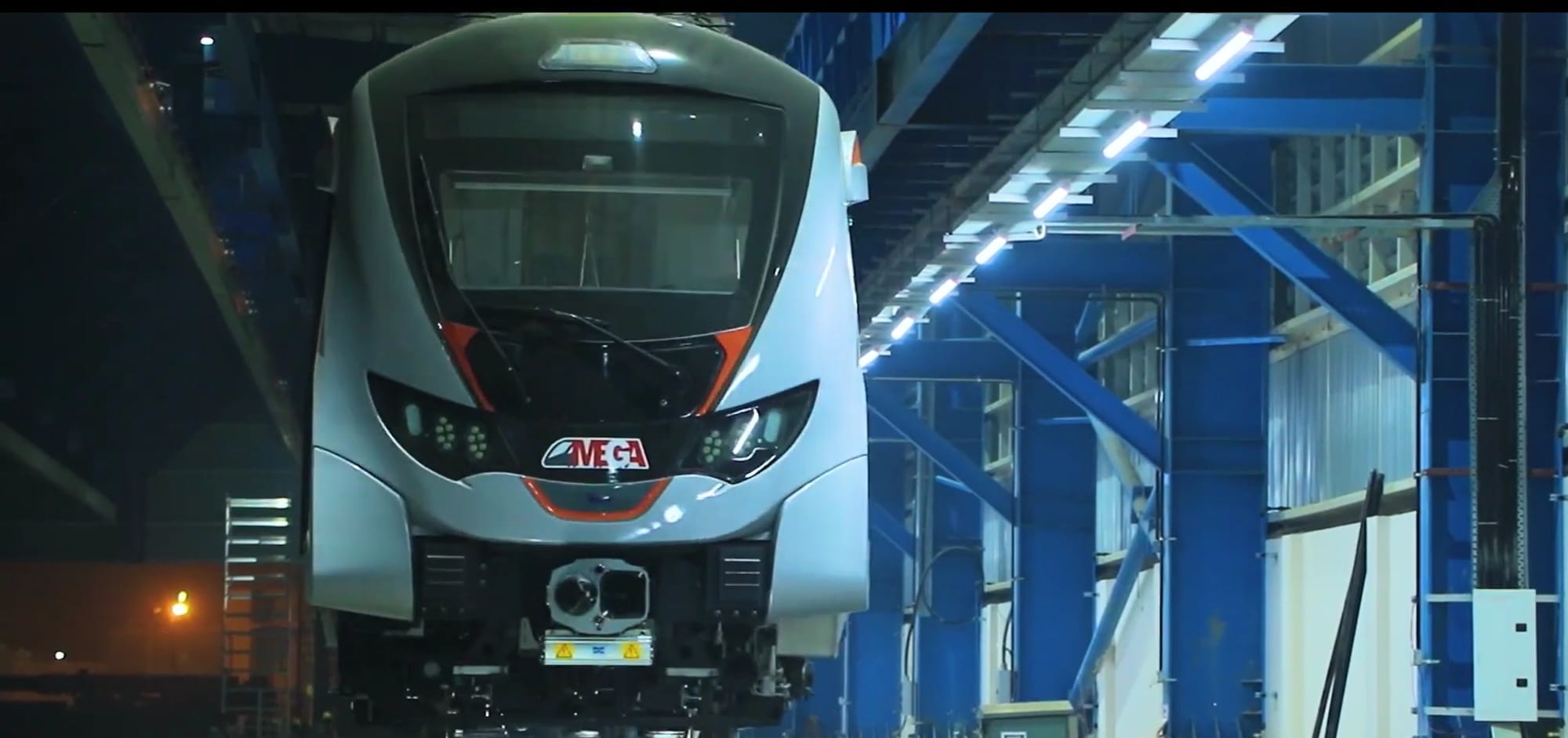
3. The Transit Multiplier: Metro Connectivity
Real estate values in this corridor are being further compressed by aggressive infrastructure upgrades, turning the region into a model for Transit-Oriented Development (TOD).
The operational Ahmedabad-Gandhinagar Metro Phase 2A (Violet Line) has fundamentally altered the commute dynamics, linking Ahmedabad’s talent pool directly to Gandhinagar’s administrative and financial hubs. Furthermore, the recently advanced GIFT City-Shahpur extension—a 3.33 km elevated corridor featuring stations at GIFT City House and the Gujarat Biotechnology University—is acting as a massive valuation multiplier for properties sitting along the alignment.
Buyers are now assessing commute times alongside construction quality. A home in Motera or Chandkheda is no longer a distant suburb; it is a direct, friction-free metro ride into the financial core of the state.
The Strategic Takeaway
The capital wave we identified in Part 1 is actively hitting the ground in Gandhinagar. Institutional lenders are heavily financing Grade-A commercial towers inside the SEZ, while regional developers are aggressively acquiring land parcels along the Randesan-Zundal belt to capture the residential spillover.
For business leaders and investors, the window for early-entry gains in the immediate GIFT City radius has closed.
The strategy for 2026 and beyond relies on tracking the secondary spillover: identifying which peripheral micro-markets and transit nodes will absorb the next 20,000 professionals migrating to Gujarat’s financial capital.
Next in the Series: Part 4: Beyond the Fab: How MSMEs Can Capture Dholera’s Semiconductor Capital
Editorial & Research Methodology
This briefing was compiled by the GujaratIcon Intelligence Desk using verified primary filings from the International Financial Services Centres Authority (IFSCA), state RERA registries, and Tier-1 commercial real estate market data. All analytical modeling and data synthesis undergo senior editorial review prior to publication.


